Sustainability
The sustainable development agenda is an integral component of Rosatom’s business performance. Rosatom adheres to the Ten Principles of the UN Global Compact, ESG priorities are explicitly stated in the Company’s Strategy for the period until 2030.
Since October 2020, Rosatom has been a member of the United Nations Global Compact. Company influences the achievement of the UN Sustainable Development Goals (UN SDGs) through sales of its products and financial and economic results of the activity, as well as by ensuring ESG principles in all internal operations.
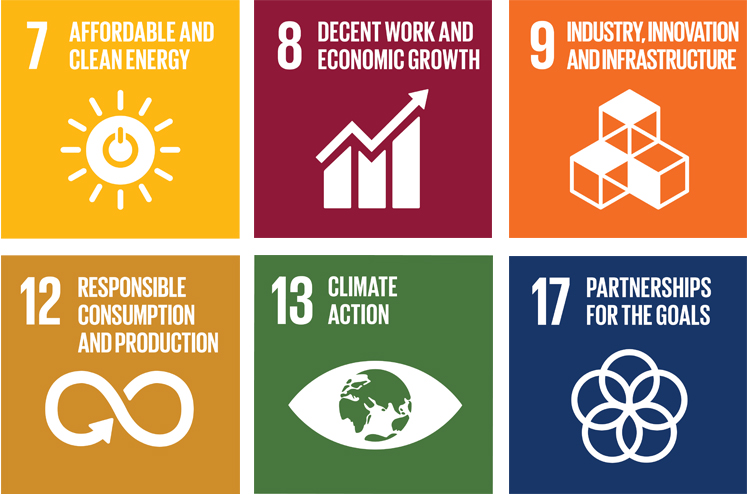
Rosatom’s activities make a solid contribution to all 17 UN SDGs. Due to the scale of business and individual NPP construction projects, the key goals for Rosatom are:
Since October 2020, Rosatom has been a member of the United Nations Global Compact. Company influences the achievement of the UN Sustainable Development Goals (UN SDGs) through sales of its products and financial and economic results of the activity, as well as by ensuring ESG principles in all internal operations.
Rosatom’s activities make a solid contribution to all 17 UN SDGs. Due to the scale of business and individual NPP construction projects, the key goals for Rosatom are:
The specifics of the nuclear industry also have a direct impact on the following UN SDGs:
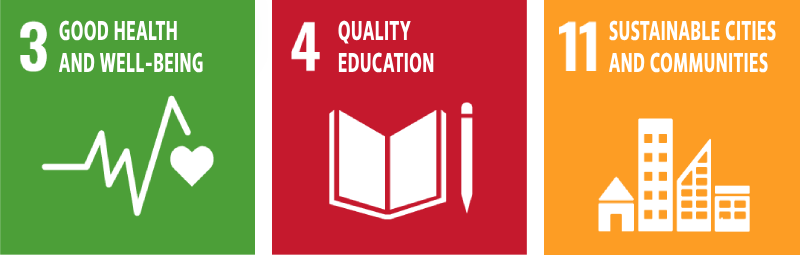
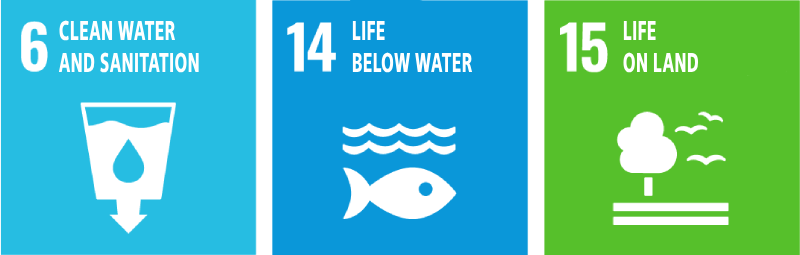
Rosatom pays special attention to preventing the risk of negative impact of any aspect of its operations on these UN SDGs:
ESG quality level of Rosatom is confirmed by ESG ratings on a regular basis. In particular, in September 2023, the biggest Russian authorized credit rating agency ACRA upgraded the ESG rating of Rosatom from ESG-3 (ESG-B) to ESG-2 (ESG-B), which corresponds to a very high assessment. In September 2024, this level was confirmed, and according to the agency’s new scale, Rosatom’s current ESG rating level is ESG-AA (ESG-2).
Rosatom’s product range includes low-carbon energy solutions, environmental solutions, and other products aimed at improving the quality of human life. When developing new business lines, special attention is paid to environmental and climate impact.
Rosatom’s product range includes low-carbon energy solutions, environmental solutions, and other products aimed at improving the quality of human life. When developing new business lines, special attention is paid to environmental and climate impact.
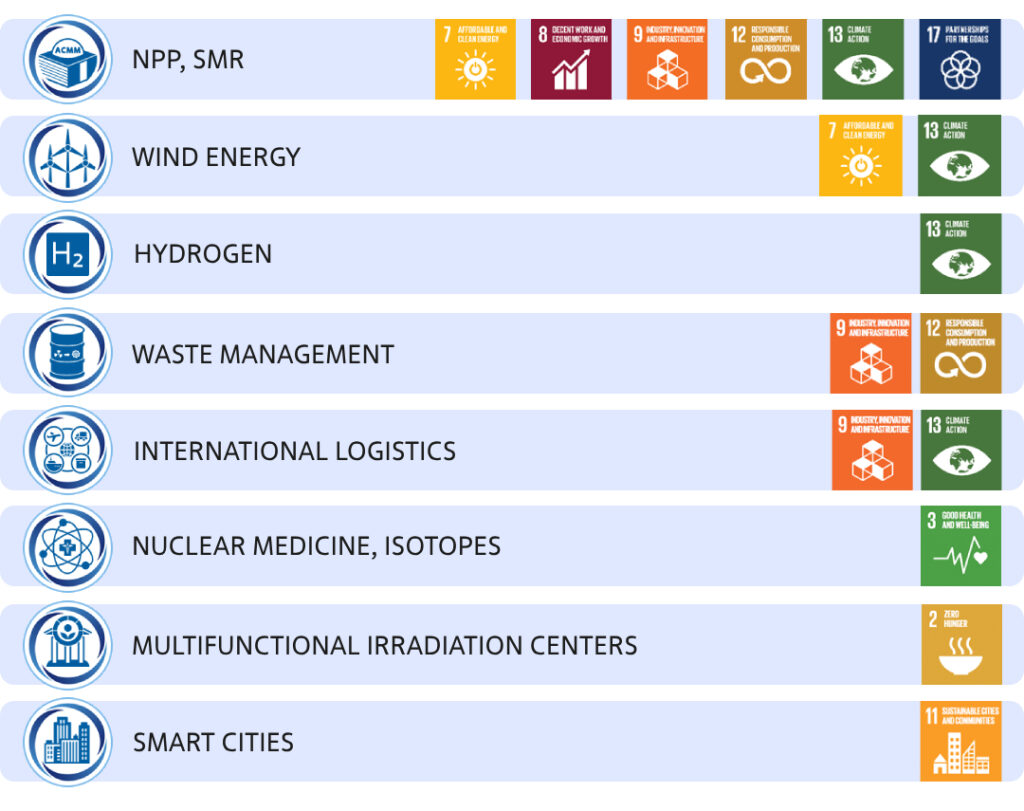
Rosatom's product lines and their contribution to the achievement of the UN SDGs
The climate agenda is a special priority for Rosatom and its entities. Nuclear power has one of the lowest levels of greenhouse gas emissions among the existing types of energy generation (along with wind power plants, which Rosatom also builds and operates). Considering this, Rosatom is making a significant contribution to solving the problems of reducing the carbon footprint in Russia – and in the world as a whole.
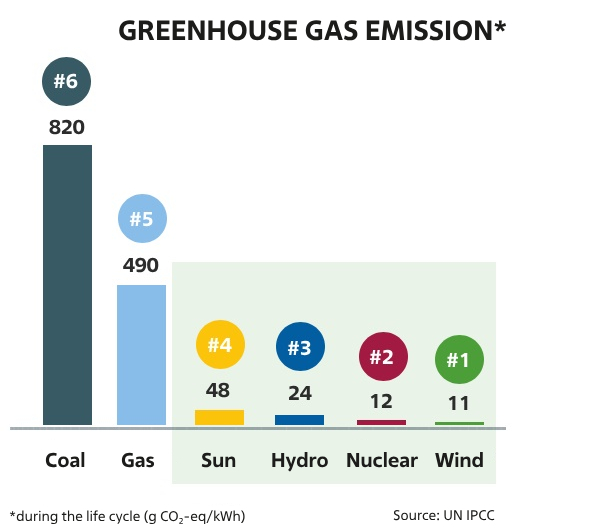
Nuclear power is one of the low-carbon ways of generating electricity, along with renewable sources of generation. In accordance with the current international and national standards of the Russian Federation, Rosatom calculates the carbon footprint for the life cycle of nuclear power plants. The current assessment confirms the status of nuclear energy as one of the cleanest types of generation. The carbon footprint of Rosatom’s NPPs is 5.1 g CO2-eq/kWh. In the calculation, 7 stages of the NPP life cycle were identified, and the most carbon-intensive are the NPP construction and Decommissioning stages.
Rosatom’s organizations are members of the Certificates of Electricity Origin National Trading System. Russian companies can acquire nuclear certificates and certificates of electricity origin from Rosatom’s wind power plants to reduce the carbon footprint of their products.
The green status of nuclear energy as a clean source of energy is enshrined in a number of regulatory documents in Russia and abroad, including the Russian Green Taxonomy, the Taxonomy of the EAEU, the EU Sustainable Finance Taxonomy, China’s Green Bonds Catalog, the K-Taxonomy of South Korea. These documents contain the requirements for confirming the green qualification.
Rosatom is focused on ESG compliance and alignment its products and projects with green taxonomies and other ESG requirements, which opens up additional access to green financing instruments.
Rosatom’s organizations are members of the Certificates of Electricity Origin National Trading System. Russian companies can acquire nuclear certificates and certificates of electricity origin from Rosatom’s wind power plants to reduce the carbon footprint of their products.
The green status of nuclear energy as a clean source of energy is enshrined in a number of regulatory documents in Russia and abroad, including the Russian Green Taxonomy, the Taxonomy of the EAEU, the EU Sustainable Finance Taxonomy, China’s Green Bonds Catalog, the K-Taxonomy of South Korea. These documents contain the requirements for confirming the green qualification.
Rosatom is focused on ESG compliance and alignment its products and projects with green taxonomies and other ESG requirements, which opens up additional access to green financing instruments.
Environmental (E)
Social (S)
Governance (G)
The Carbon Footprint of Rosatom Products